Project Overview
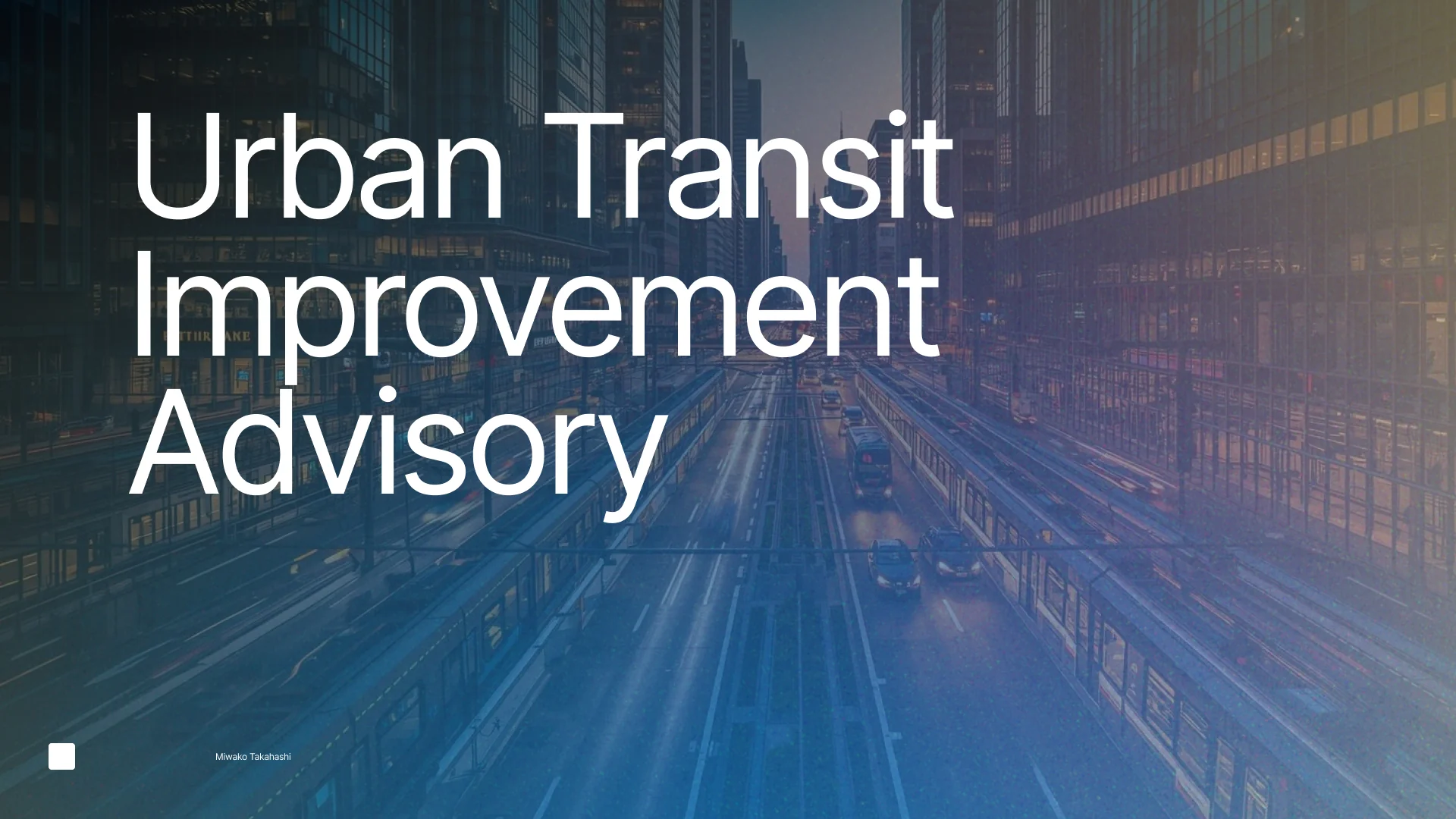
This project explores how visual structure and UX thinking can support strategic decision-making in urban transit planning. The goal was to translate complex transportation challenges into a clear, visually driven advisory narrative that stakeholders can quickly understand and align around.

Problem
This section defines the structural challenges facing urban transit systems and frames the strategic need for intervention.
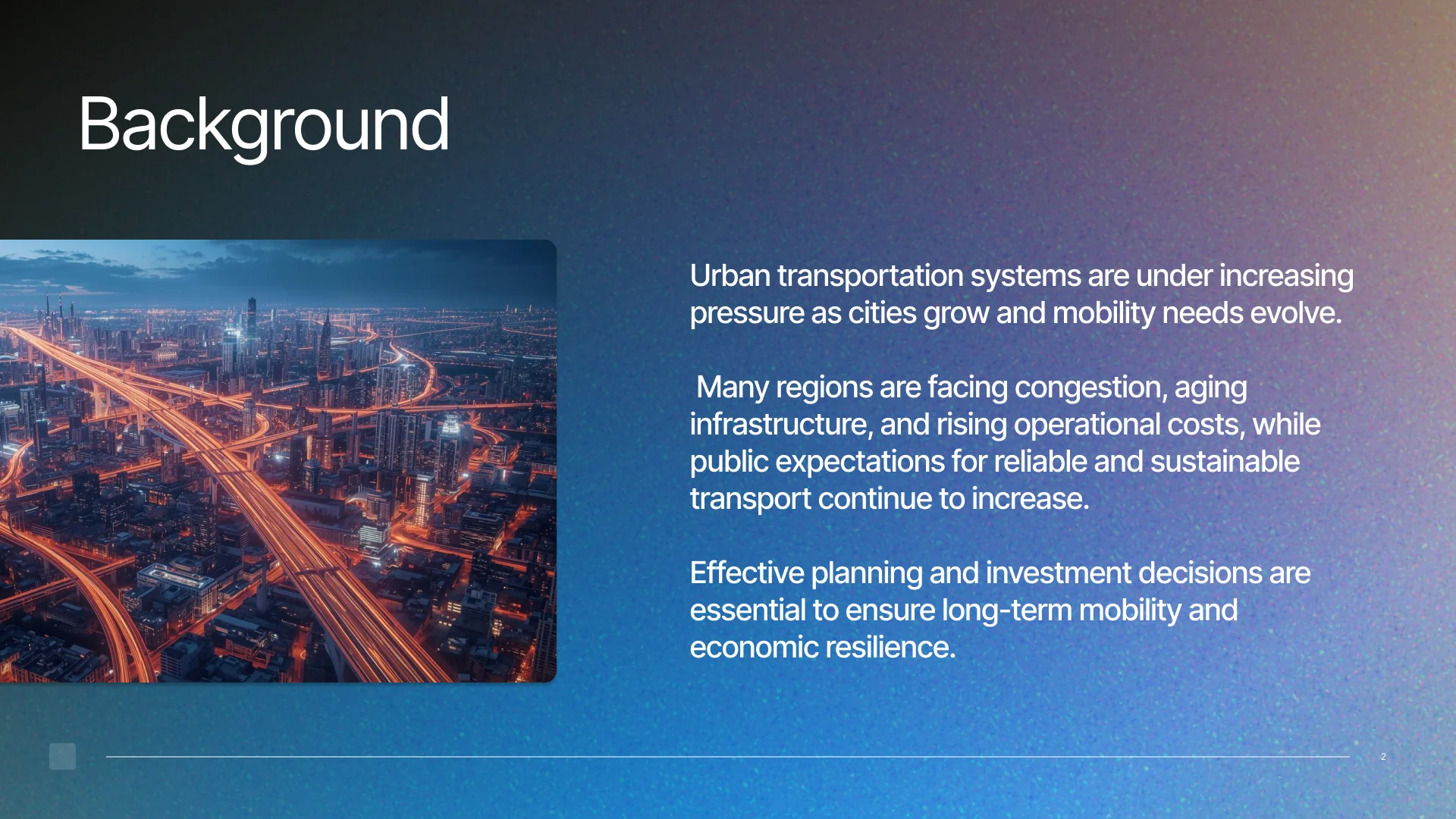
The focus here was to clarify the scale of the issue without overwhelming stakeholders with excessive data, establishing urgency while maintaining strategic neutrality.
Key Challenges
To make the problem actionable, the challenges were grouped into three strategic categories.
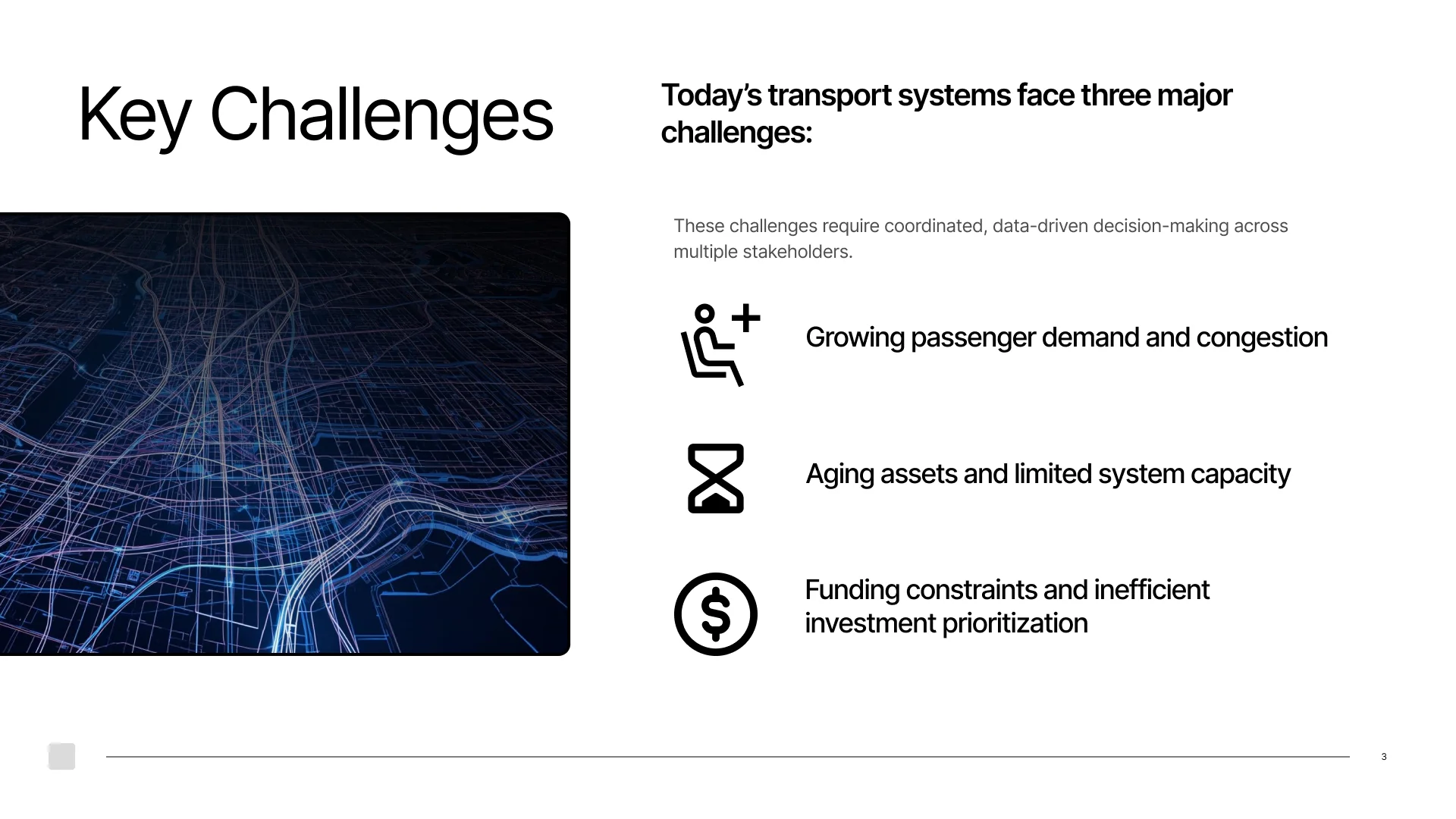
The intent was to simplify complex system constraints into decision-relevant themes rather than operational details.
Our Advisory Approach
Rather than proposing isolated solutions, the advisory model was structured as a phased decision framework.
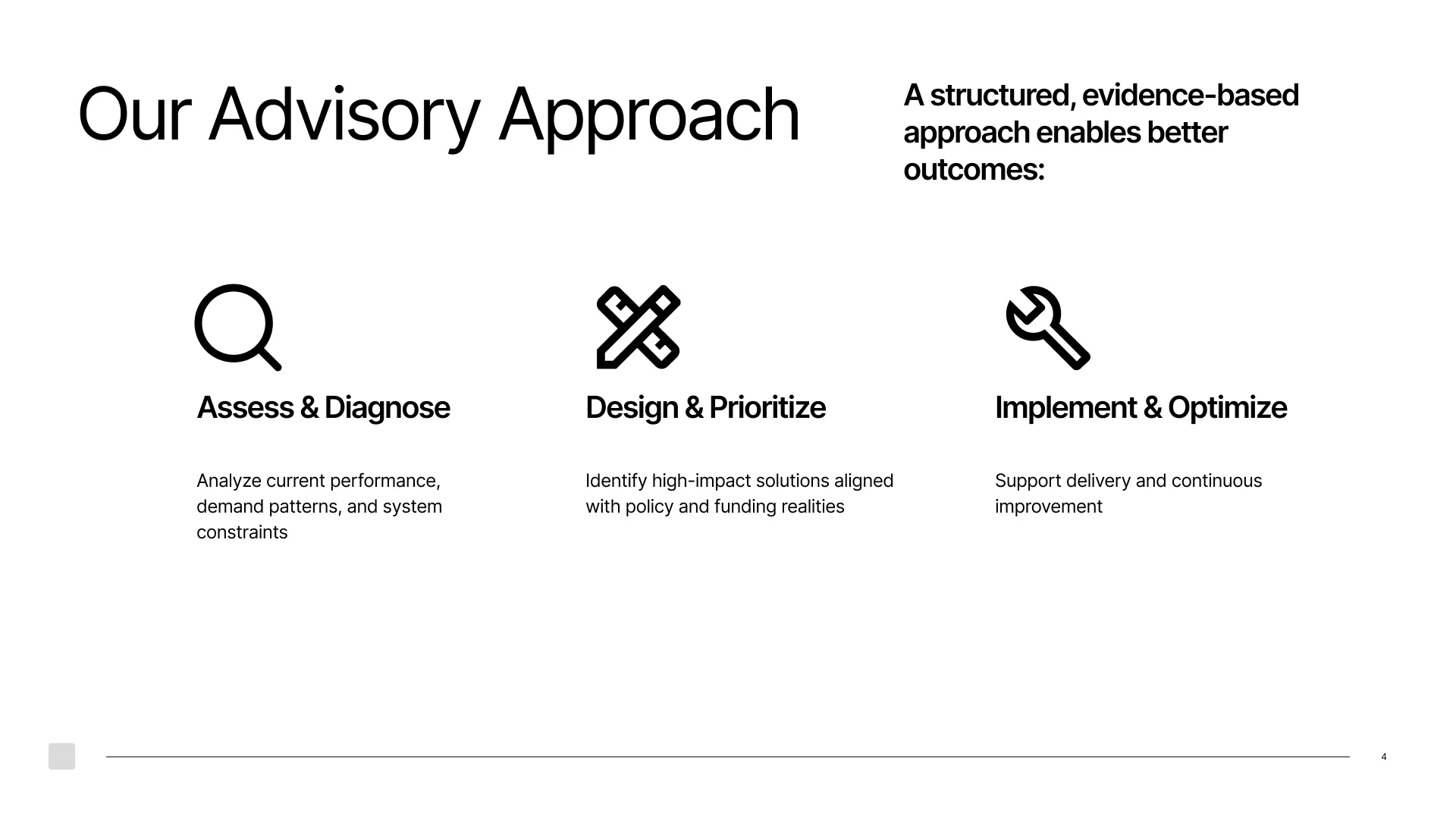
The three-step model helps stakeholders move from diagnosis to prioritization and implementation without losing alignment across departments.
Key Focus Areas
These focus areas reflect where strategic impact and stakeholder alignment intersect.
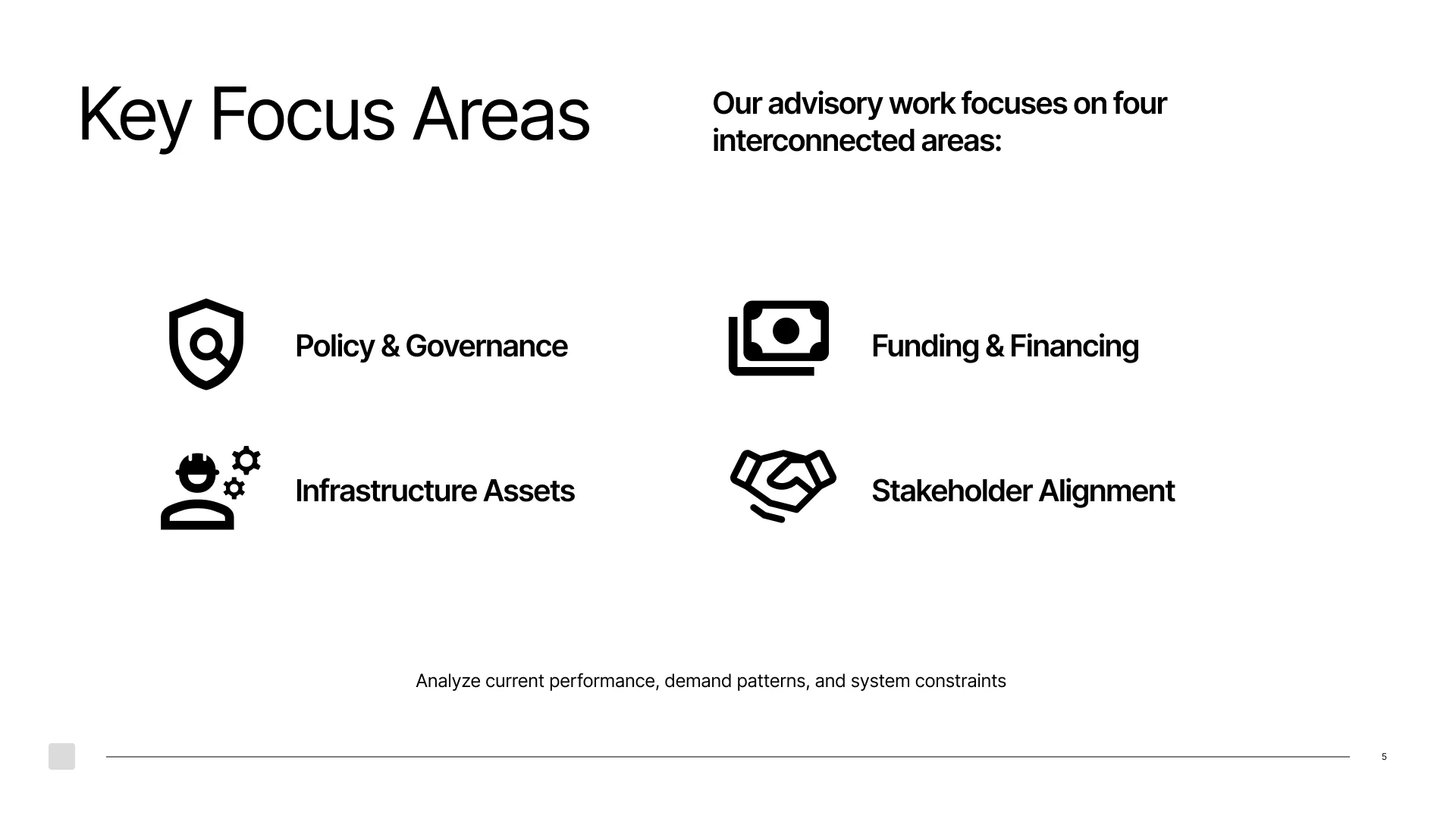
The categorization was designed to balance governance, financial feasibility, operational capacity, and cross-agency coordination.
Expected Outcomes
The projected outcomes demonstrate how structured advisory thinking translates into measurable public value.
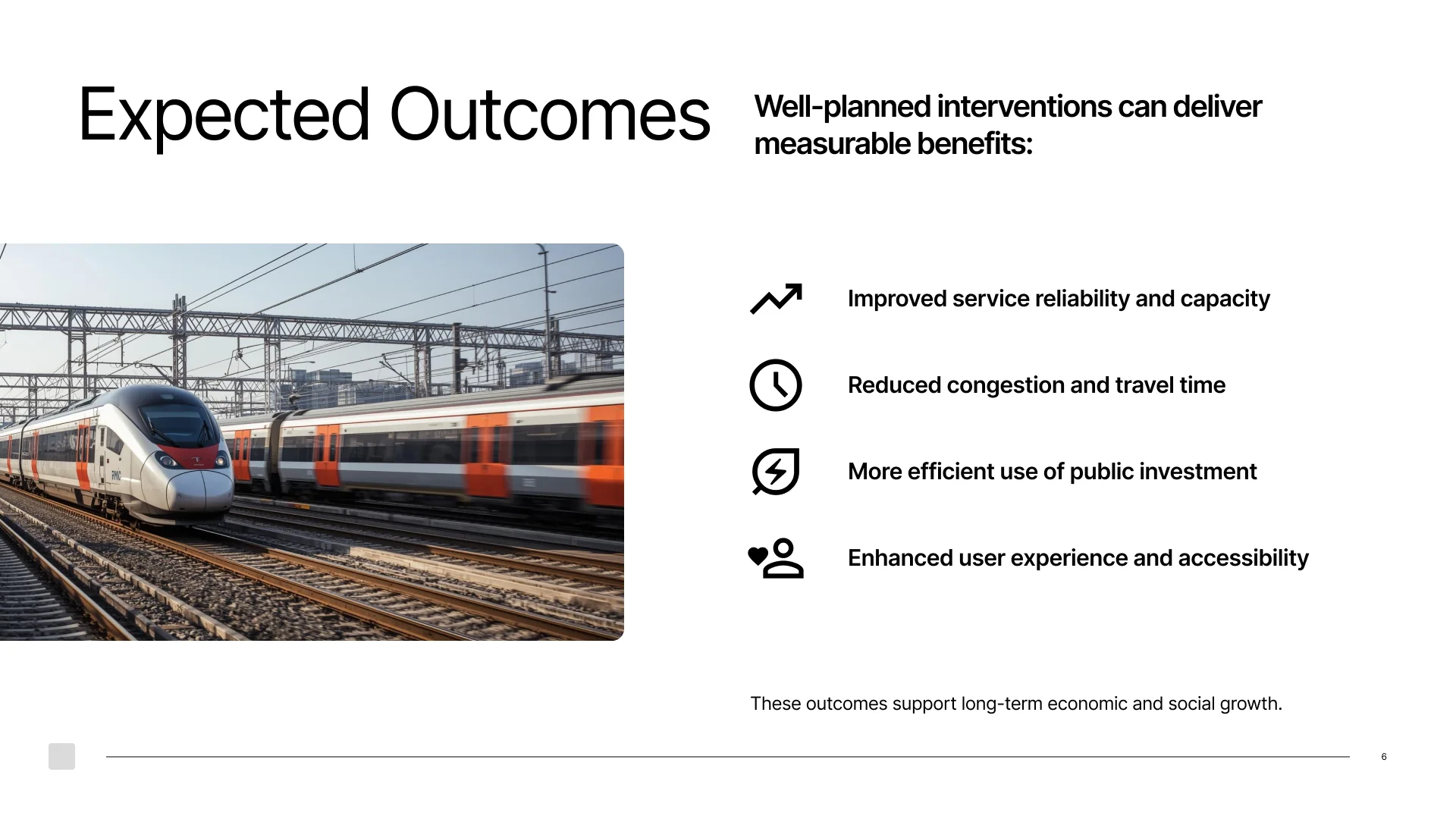
Emphasis was placed on outcomes that resonate both politically and operationally, ensuring feasibility and accountability.
Why This Matters
Beyond infrastructure, transit strategy directly shapes social equity, environmental sustainability, and economic resilience.

Reflection
This project was completed within a one-week conceptual timeframe. With extended research and stakeholder input, the framework could be further refined through:
- Quantitative data validation
- Scenario modeling
- Stakeholder workshop facilitation
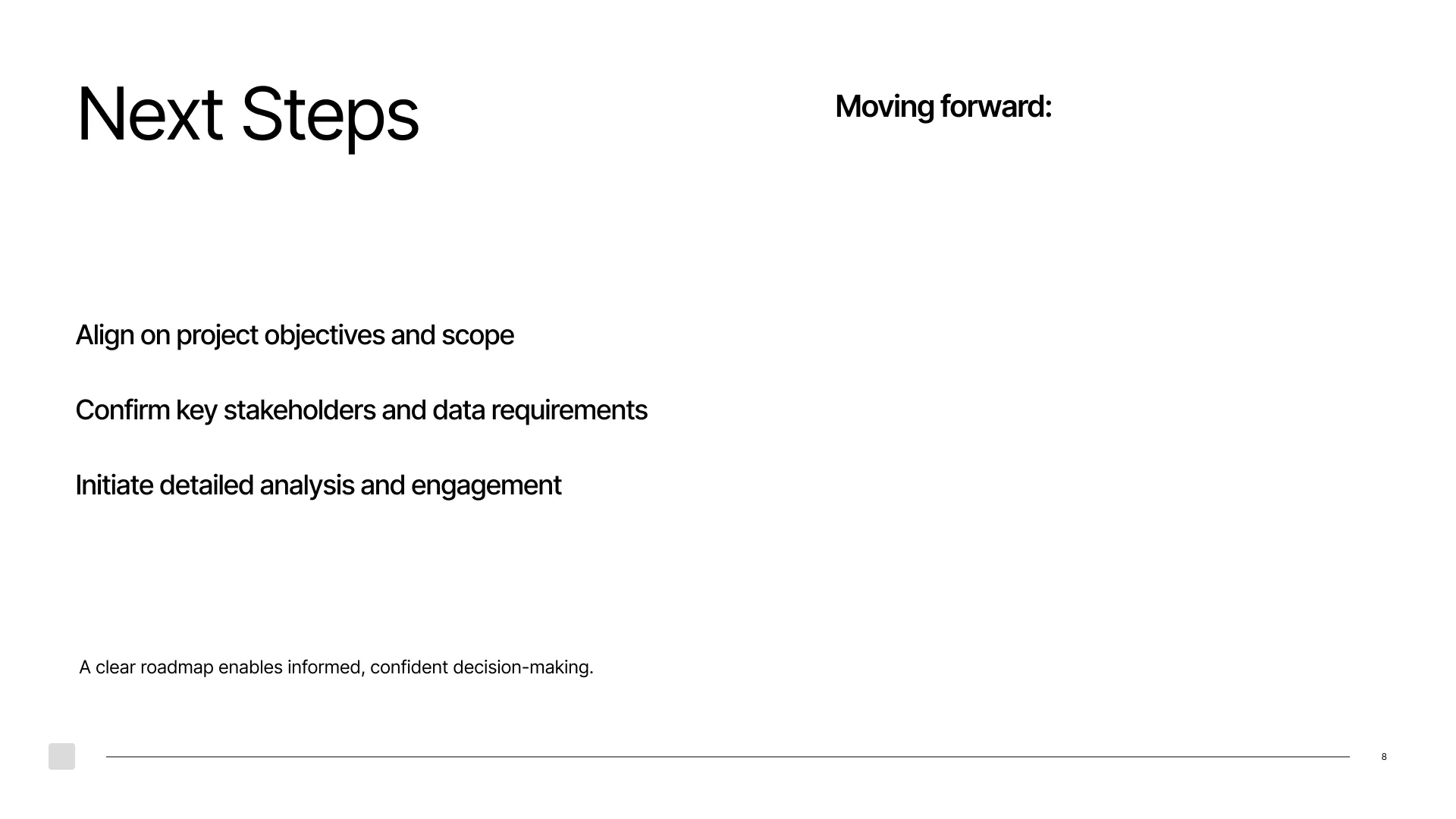
- Visual prototyping of decision dashboards